
A night on Tien Hoa beach: wait 20 minutes before the sun rises — that's the moment worth the trip
A wide beach, soft sand, close to Phan Thiet yet quiet. But beach camping isn't as simple as pitching a tent. This article has something others don't: a 12-month sunrise time and direction chart, calculated specifically for Tien Hoa beach's coordinates — so you know exactly which month to go and what time to set your alarm.
Part 01Why Tien Hoa, not Mui Ne
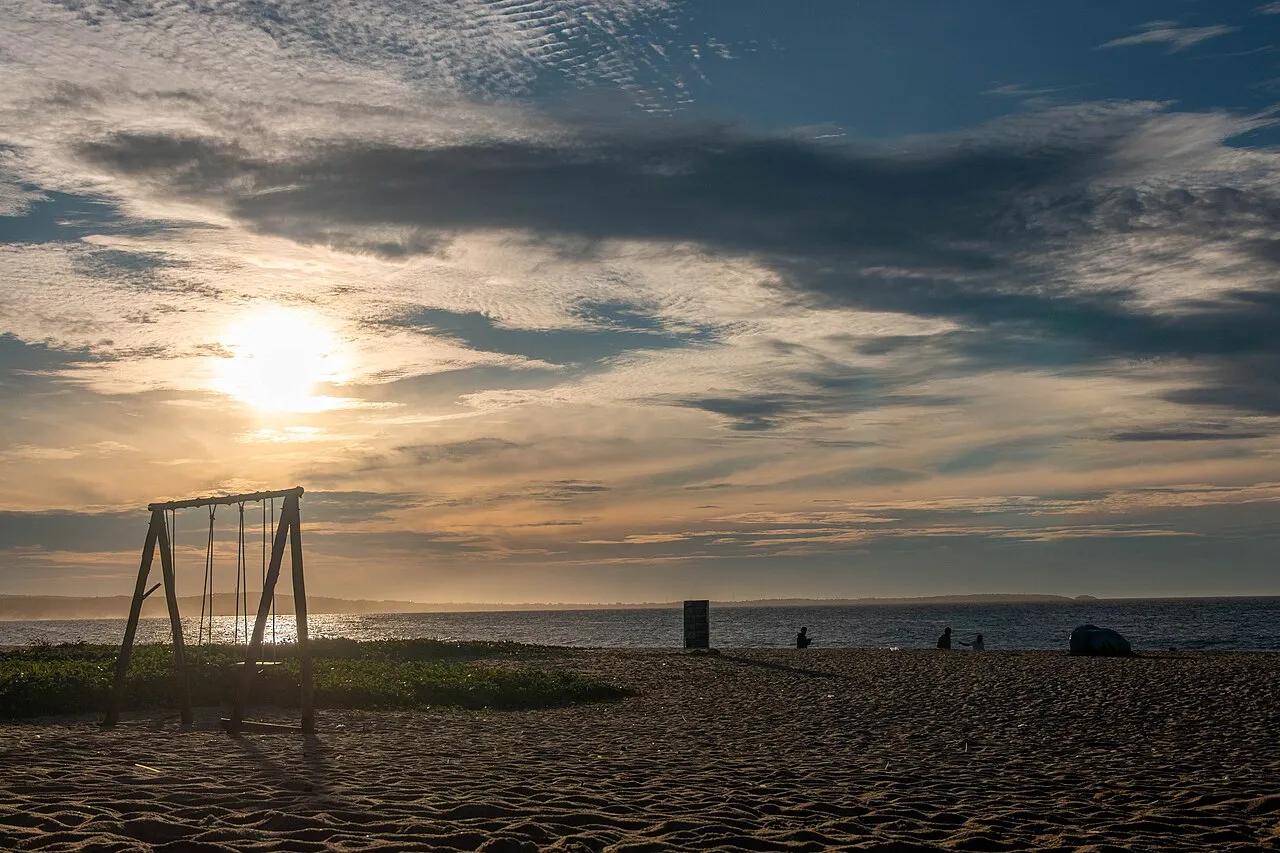
Tien Hoa is a coastal hamlet in Tien Thanh ward, on Road DT 719 (Lac Long Quan road) running south of Phan Thiet. People assume that sleeping on a beach means heading to Mui Ne. It's actually the opposite, and the reason comes down to the direction the coastline faces.
The Ham Tien – Mui Ne strip faces northeast. From November to March, the northeast monsoon blows straight in — exactly why Mui Ne became Asia's kitesurfing capital (see our guide to the windy season). Wind that's great for a kite is terrible for a tent: sand blowing everywhere, the tent shaking all night, no way to light a stove.
The Tien Thanh coast runs northeast-southwest, so the beach faces southeast. The same northeast wind hits at an angle from inland here, and it's further blocked by a line of casuarina trees and dunes behind the beach. Same season, less than thirty kilometers apart, and one side gets battered by wind while the other stays sheltered.
You'll see some sites list Tien Thanh as 10 km from Phan Thiet, and others say 33 km. Neither is wrong: 10 km gets you to the start of the Tien Thanh coastline, while 33 km covers the full length of Road DT 719 down to the border with Thuan Quy – Ke Ga. Tien Thanh ward's own coastline alone runs about 20 km, so ask which stretch rather than just "how far."
Part 02The sunrise clock: 12 months, what time, and what direction
This is the most valuable part of this article. The sun doesn't rise at the same time, and it doesn't rise in the same spot, year-round. At Tien Hoa, the sunrise point shifts nearly 48 degrees along the horizon between June and December — enough to completely change your photo composition and where you should sit.
| Month | First light | Sunrise | Azimuth | Rises toward | Weather |
|---|---|---|---|---|---|
| January | 5:48am | 6:10am | 111° | East – Southeast | Dry, strongest northeast wind |
| February | 5:47am | 6:08am | 103° | East – Southeast | Dry, wind easing — best |
| March | 5:34am | 5:55am | 92° | due East | Dry, calm, still sea — best |
| April | 5:15am | 5:37am | 80° | due East | Dry, starting to heat up |
| May | 5:03am | 5:25am | 71° | East – Northeast | Early rain, hot |
| June | 5:02am | 5:25am | 66° | Northeast | Rainy season, very early wake-up |
| July | 5:10am | 5:33am | 68° | East – Northeast | Rainy season |
| August | 5:16am | 5:38am | 75° | East – Northeast | Rainy season, evening storms common |
| September | 5:16am | 5:37am | 87° | due East | Heaviest rain of the year |
| October | 5:15am | 5:37am | 98° | due East | Rain tapering off, still unpredictable |
| November | 5:21am | 5:43am | 109° | East – Southeast | Rain ends, northeast wind picks up |
| December | 5:35am | 5:58am | 114° | Southeast | Dry, strong wind, cool nights |
Three takeaways from the table above:
- The yearly range is only 45 minutes. Earliest is June (5:25am), latest is January (6:10am). That means setting your alarm for 4:45am is a safe bet, whichever month you go.
- First light arrives about 22 minutes before sunrise. This is the most important figure most people miss: the sky is already glowing with color well before that, and that stretch is actually the best time to watch and to shoot.
- In winter, the sun rises noticeably toward the southeast. December's azimuth of 114° means it rises straight out over the open sea in front of the beach. By June it's down to 66°, shifting toward the northeast, where the Phan Thiet – Mui Ne coastline blocks the distant view. The dry season happens to be both easier to camp in and give you a better sun angle — two things that coincidentally line up.
February and March are the best. The rain has fully stopped, the northeast wind has eased compared to December–January, the sea is calm, the sun still rises toward the southeast, and sunrise comes late enough (5:55–6:08am) that you don't have to wake up too early. November, December, and January are still workable but windier — pick a sheltered spot and anchor your tent well. June through September isn't recommended: rainy season, frequent evening storms, and a 5:25am sunrise means waking at 4:40am.
Part 03A night at Tien Hoa, hour by hour
The times below are based on March (sunrise at 5:55am). Traveling another month, shift the whole morning block according to the chart in Part 02.
-
3:30pm
Arrive and pick a spot
Arrive early enough to see the beach clearly. Look for the darker, wet sand line — that marks the highest recent tide line. Pitch your tent at least 15–20m further inland, on dry sand with casuarina trees to block the wind behind you.
-
4:30pm
Set up the tent, drive stakes
Beach sand holds regular stakes very poorly. An old trick from beach regulars: bury a bag of sand or a full water bottle as an anchor instead of driving a stake straight in. The tent door should face with your back to the wind, not toward the sea.
-
5:30pm
Sunset behind you
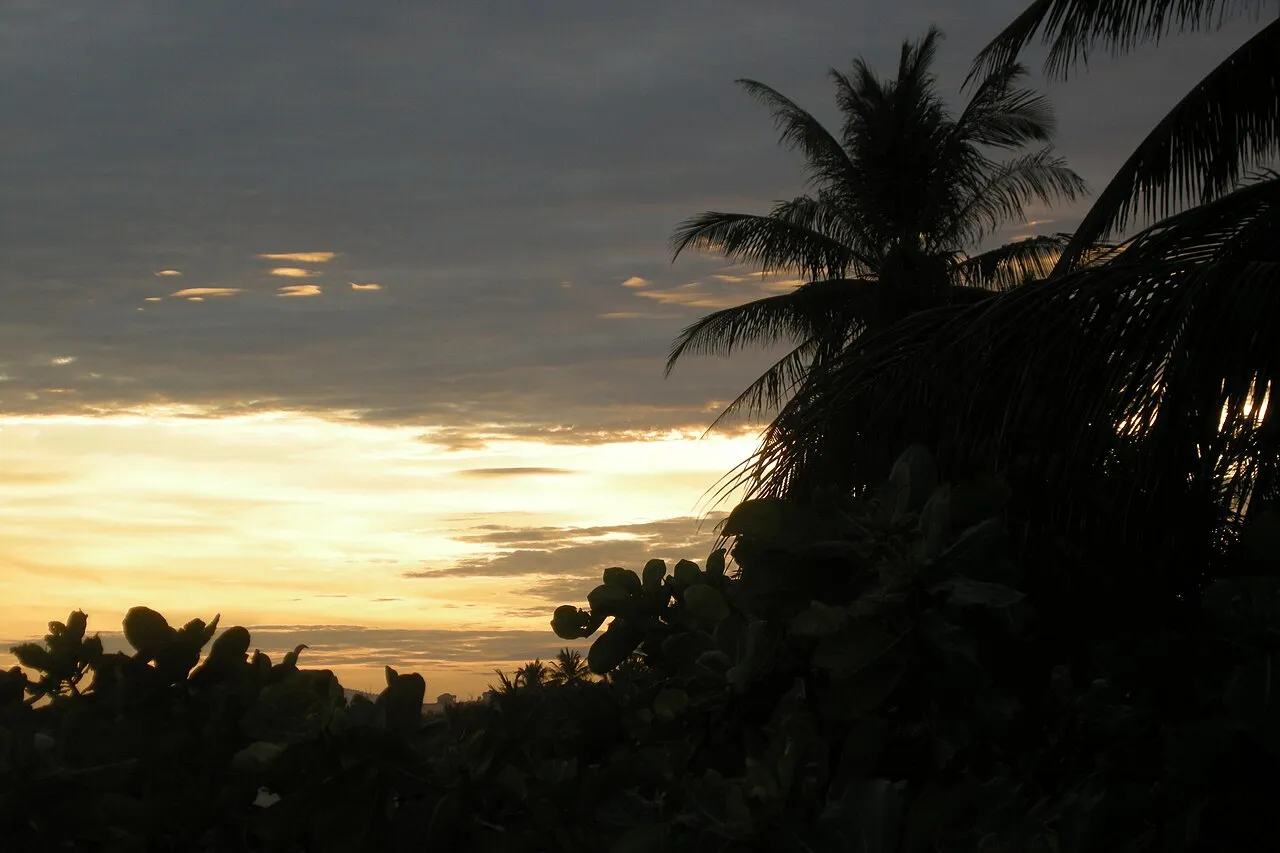
This is Tien Hoa's quirk: since the beach faces southeast, the sun sets behind you, casting a pink-orange glow over the sea in front. You won't see the sun's disk dip into the water, but the color is arguably better — the whole coastline lights up.
-
6:30pm
Dinner
The sea wind blows out fire very easily. A windproof mini gas stove is safer and faster than a wood fire. If you do build a campfire, dig a shallow pit, ring it with stones, and fully douse it before sleeping.
-
8:00pm
Full dark — step away from the light
Walk a few dozen meters from your tents, turn off all lights, and sit still for 15 minutes to let your eyes adjust. On a moonless night here, you can see the Milky Way. For the best chance, pick a date near the new moon on the lunar calendar.
-
9:30pm
Fishing boats heading out
A string of small lights drifting along the horizon — squid boats from the fishing village. It's the most distinctive night scene on this coast, and also the easiest way to gauge the horizon in the dark.
-
4:50am
Alarm goes off
Get up at least 40 minutes before sunrise. Boil some water, head to the water's edge and wait. This is the coldest point of the day — bring a jacket even in the middle of summer.
-
5:35am
First light — the most beautiful moment
Many people think they need to wait for the sun to actually rise. Really, the 20 minutes before that is the best light: the horizon shifts from purple to pink to orange, and the sea turns mirror-flat. The best photos are usually taken in this window.
-
5:55am
The sun touches the sea
The sun's disk takes about 2–3 minutes to fully clear the horizon. If you're shooting, don't fumble with settings now — set them up during first light instead.
-
6:30am
Boats coming ashore
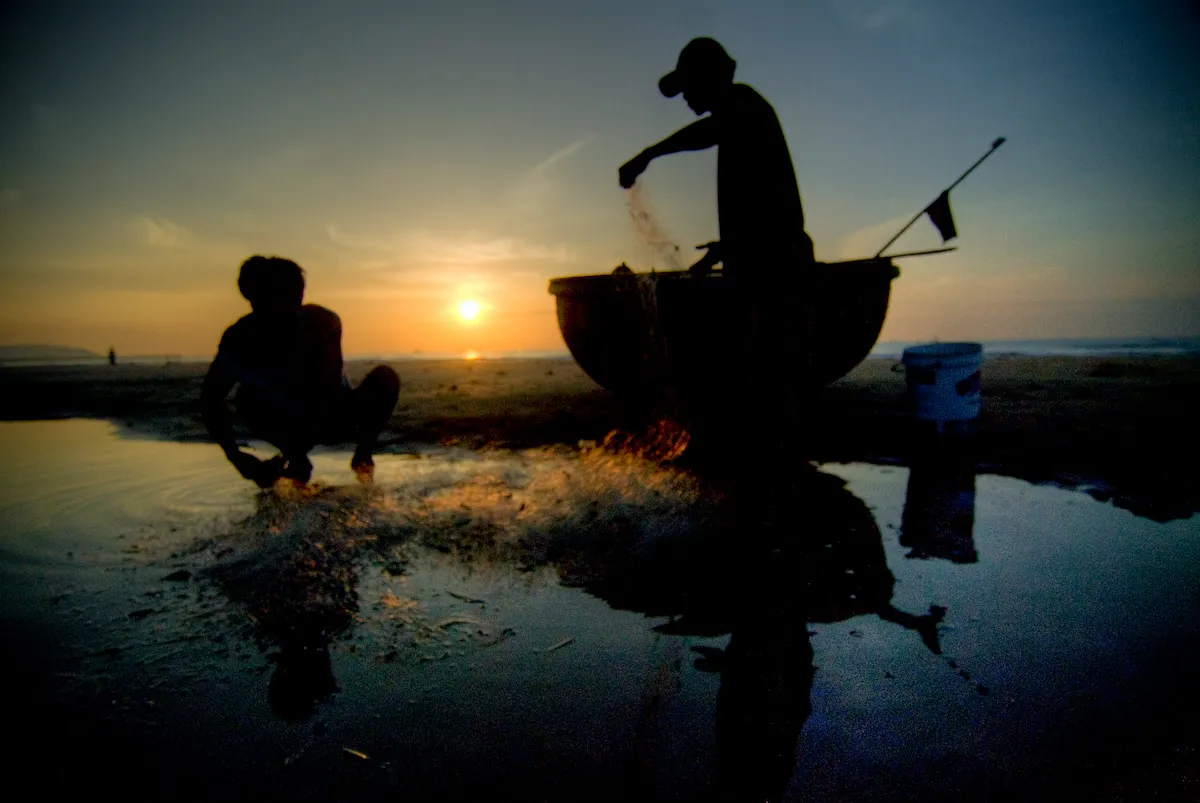
Boats and round basket boats land, fresh fish unloaded right there. To buy some, ask the price politely and pay in cash — this is a working market for locals, not a tourist stall.
-
8:00am
Pack up and leave
Collect every bit of trash, even small scraps, erase any fire-pit marks, and flatten out stake holes. Leave no trace that you were ever there — that's the condition that keeps this beach open to camping next year.
Part 04Where to pitch your tent
This is where newcomers most often get it wrong, and the mistake gets paid for at two in the morning.
The waters off Phan Thiet follow an irregular semi-diurnal tide: two high tides and two low tides each day, but the two highs aren't the same height. The typical range runs about 1.5–2m, with some sources citing tide tables reaching over 3m at spring tide. On a gently sloping beach like Tien Hoa, a one-meter difference in height can mean tens of meters of horizontal sand.
A simple approach that doesn't require reading a tide table: look for the darker, wet sand line and the drift line of washed-up debris — that marks the highest recent tide. Pitch your tent at least 15–20m further inland from that line, choosing fully dry, loose sand with some casuarina shade. If you're traveling around the full or new moon (spring tide), move back even further.
- Back against the casuarina trees, facing the sea. The tree line blocks wind and night dew. Don't pitch in the open sand just for the view — the night will be very long.
- Avoid the base of rock outcrops and breakwaters. Water around the base of a breakwater swirls hard and is much less predictable than an open sloping beach.
- Avoid inlets and places where water drains from inland. If you see a channel of water carved into the sand, keep moving — that spot floods at high tide.
- Don't block boat access paths. This flat coastline is a working area for the fishing village; boats and round basket boats need a clear path to shore, usually visible as smooth sand tracks.
- Don't camp in front of a resort gate or inside a project boundary. Road DT 719 has several resorts that hold rights to the beach in front of them. Choose a public stretch, or ask ahead to be sure.
On erosion: the Tien Thanh coastline sits on sandy ground and does experience some erosion, though less than Ham Tien – Mui Ne. Some stretches are visibly wider one year and narrower the next. Our article on soft geotube breakwaters covers this in detail. For campers, the practical takeaway is specific: don't trust your memory from a previous trip — look at the beach again with your own eyes that afternoon.
Part 05What to bring, and what to leave behind
Essential
- A double-layer, waterproof tent — night sea dew is heavy, and a single-layer tent will be soaked by morning
- Long stakes or a bag/bottle to use as an anchor — short stakes don't hold in beach sand
- A headlamp + spare batteries (a handheld flashlight gets in the way while pitching a tent in the dark)
- Fresh water: budget 3 liters per person for one night — including morning face-washing
- A windbreaker: coastal dawn is much colder than it feels in the evening
- A large trash bag — take all your trash with you
Worth bringing
- A windproof mini gas stove — faster and safer than a wood fire in sea wind
- A moisture-barrier mat or tarp under the tent floor
- A power bank — phone batteries drain fast in the cold while searching for signal
- Strap-on rubber sandals: works on both wet sand and rocky patches
- Hand sanitizer, wet wipes (no fresh water at this undeveloped beach)
- An app for checking tide times and sunrise, with offline maps downloaded
Best left behind
- A speaker — sound carries far across an open beach, disturbing both people and boats
- Glass items: breaking on sand creates a long-term hazard that's nearly impossible to fully clean up
- Single-use plastics: the wind can blow them into the sea in seconds
- Expectations of stable 4G signal or a nearby restroom
Tent stakes are usually what ruins the plan. The short aluminum stakes that come with most tents are nearly useless in beach sand — a few gusts and they pop right out. The surest method: fill a thick plastic bag with sand, or use a full 1.5-liter water bottle, tie the tent line to it, and bury it 25–30cm deep. This kind of anchor holds far better than any stake.
Salty sea mist damages gear fast. Cameras, lenses, and power banks should be kept in a sealed bag with a moisture-absorbing packet when not in use. Wipe them down with a dry cloth first thing in the morning — salt left on a lens for too long is hard to remove.
Part 06Safety and beach etiquette
- Never swim at night, no exceptions. This flat coastline has rip currents that are invisible at night, and no one would see you if something went wrong. Wait until daylight to get in the water.
- Learn to spot rip currents. They appear as a strip of water that's calmer, darker, and has fewer whitecaps than the water on either side — it looks gentle but is actually the most dangerous spot. If caught in one, don't swim straight back toward shore; swim parallel to the beach to escape the current before heading in.
- Fire: dig a shallow pit, ring it with stones, and douse it fully with water until cold. Never bury embers in sand and walk away — they can smolder for hours, and someone walking barefoot the next day could step right on them.
- Travel with at least one other person, and tell someone your location. Phone signal is patchy along much of the Tien Hoa coastline.
- Don't build a fire or play loud music in strong wind. Embers blowing into dry casuarina trees is a real risk.
- Take all your trash with you. This beach stays beautiful and open to camping because most visitors clean up after themselves. That's a condition, not a suggestion.
Free camping on beaches in Vietnam sits in a gray area — there's no blanket ban, but individual stretches of coast may fall under local government, project, or resort management, and rules can change over time. The safest approach is to ask a local or a nearby drink stall before pitching your tent. Locals are almost always happy to point you in the right direction, and often to an even better spot than the one you had in mind.

Part 07Not into sleeping in a tent? Here's how to still catch the sunrise
To be blunt: beach camping isn't for everyone. No restroom, no fresh water, wind and dew all night, and sand everywhere by morning. If you're traveling with young kids or older relatives, a few options let you still catch sunrise without sleeping outdoors:
- Rent a beachfront homestay or villa, and walk out to the beach early. The sunrise is exactly the same — the only difference is a hot shower afterward. See our guide to sea-view homestays in Tien Thanh.
- Book a resort along Road DT 719 — many have their own private path down to the beach, less than two minutes to the water.
- A day trip: arrive the evening before, catch the sunset, have dinner at the fishing village, then head home; return early the next morning. Road DT 719 is quiet and easy to drive at that hour.
- Pair it with Ke Ga: continue south to Ke Ga point and Vietnam's oldest lighthouse — together they make a complete two-day route. A ready-made suggestion is in our 2-day, 1-night itinerary.
Part 08Frequently asked questions
What time does the sun rise at Tien Hoa beach?
It varies by month, ranging from 5:25am (June) to 6:10am (January) — about a 45-minute range across the year. But the sky starts glowing with color roughly 22 minutes before that, and that pre-dawn stretch is actually the most beautiful. Set your alarm for 4:45am to be safe, whichever month you travel.
What's the best month to camp at Tien Hoa?
February and March are the best: the rain has stopped, the northeast wind has eased, the sea is calm, and sunrise comes late enough (5:55–6:08am) that you don't have to wake up too early. November, December, and January are still workable but windier — pick a sheltered spot and anchor your tent well. June through September is rainy season with frequent evening storms and isn't recommended.
Why is camping in Tien Thanh more pleasant than in Mui Ne?
Because the coastline faces a different direction. The Ham Tien – Mui Ne strip faces northeast, catching the full force of the northeast monsoon from November to March — great for kitesurfing but very hard for pitching a tent. The Tien Thanh coast faces southeast, so the same wind hits at an angle from inland and is further blocked by casuarina trees and dunes behind the beach.
How far from the water's edge is safe to pitch a tent?
Don't measure from the water line when you arrive, since the tide changes. Look for the darker, wet sand line and the drift line of washed-up debris — that marks the highest recent tide — then pitch your tent at least 15–20 meters further inland from that line, on fully dry, loose sand. The Phan Thiet coast has a tidal range of about 1.5–2m, and on a gently sloping beach, one meter of height difference can mean tens of meters of horizontal sand.
What if tent stakes won't hold in the sand?
The short aluminum stakes that come with most tents are nearly useless on beach sand. What beach regulars usually do: fill a thick plastic bag with sand or use a full 1.5-liter water bottle as an anchor, tie the tent line to it, and bury it 25–30cm deep. This kind of anchor holds far more securely than any stake.
Is camping allowed on the Tien Thanh coast?
It's a gray area: there's no blanket ban, but individual stretches of coast may fall under local government, project, or resort management, and rules change over time. The safest approach is to ask a local or a nearby drink stall before pitching your tent. Avoid camping in front of a resort gate or inside a project boundary.
Can you swim at night?
No, absolutely not. This flat coastline has rip currents that are invisible at night, and no one would notice if something went wrong. Even during the day, learn to spot rip currents: a strip of water that's calmer, darker, and has fewer whitecaps than the water on either side. If caught in one, swim parallel to the shore to escape the current before heading in — never swim straight back against it.
Can you see stars and the Milky Way at Tien Hoa?
Yes, thanks to the quiet beach and minimal city light. For the clearest view, pick a date near the new moon to avoid moonlight, walk away from your tents, turn off all lights, and sit still for about 15 minutes to let your eyes adjust. Beyond the stars, there's another distinctive sight: a string of squid-fishing boat lights drifting along the horizon.
Is there a way to catch sunrise without sleeping in a tent?
Yes. Rent a beachfront homestay or villa and walk out to the beach early — the sunrise is exactly the same, but with a hot shower afterward. Many resorts along Road DT 719 also have a private path down to the beach, under two minutes to the water. Or make it a day trip: arrive the evening before for the sunset, then return early the next morning.
The complete Tien Thanh A–Z guide · Tien Thanh's beaches: choosing the right one · The Tien Thanh fishing village · 2-day, 1-night itinerary · Ke Ga point · the full Tien Thanh guide
Love this coast enough to want a place of your own?
MH Travel operates rental villas along the Tien Thanh – NovaWorld Phan Thiet coast. See real photos, real availability, and even the honest downsides of each unit.
See available villasDisclaimer Camping and open-water swimming always carry risk. This article shares reference experience and doesn't replace your own assessment of real conditions on the day you travel. Check the weather forecast and any local advisories before your trip, and ask locals when in doubt.
Photos in this article Sunrise and fisherman photos are from Wikimedia Commons under Creative Commons licenses, credited beneath each image. All other photos are from Ai Van Real Estate's image library.
Read more
More from the travel guide
Need a place to stay for this trip?
Whole-villa rentals inside NovaWorld — private pool, kitchen, BBQ garden. Rates straight from the operator, availability updated in real time.